Bill Oliverio serves as Editor-in-Chief of Pneuma: The Journal of the Society for Pentecostal Studies, having previously served as Co-Editor-in-Chief. He holds a PhD in Theology from Marquette University, an MA from Bethel Theological Seminary, and a BA from North Central University.
Dr Bill’s work focuses on Christianity in the modern world, hermeneutic theory, and Pentecostal studies, particularly at the intersection of philosophy and theology. He has taught theology, philosophy, and ethics at institutions including Marquette University, Portland Seminary, Northwest University, and The School of Urban Missions, and has also been involved in pastoral ministry.
His publications include Theological Hermeneutics in the Pentecostal Tradition: A Typological Account, Pentecostal Hermeneutics in the Late Modern World, as well as numerous journal articles and edited volumes.
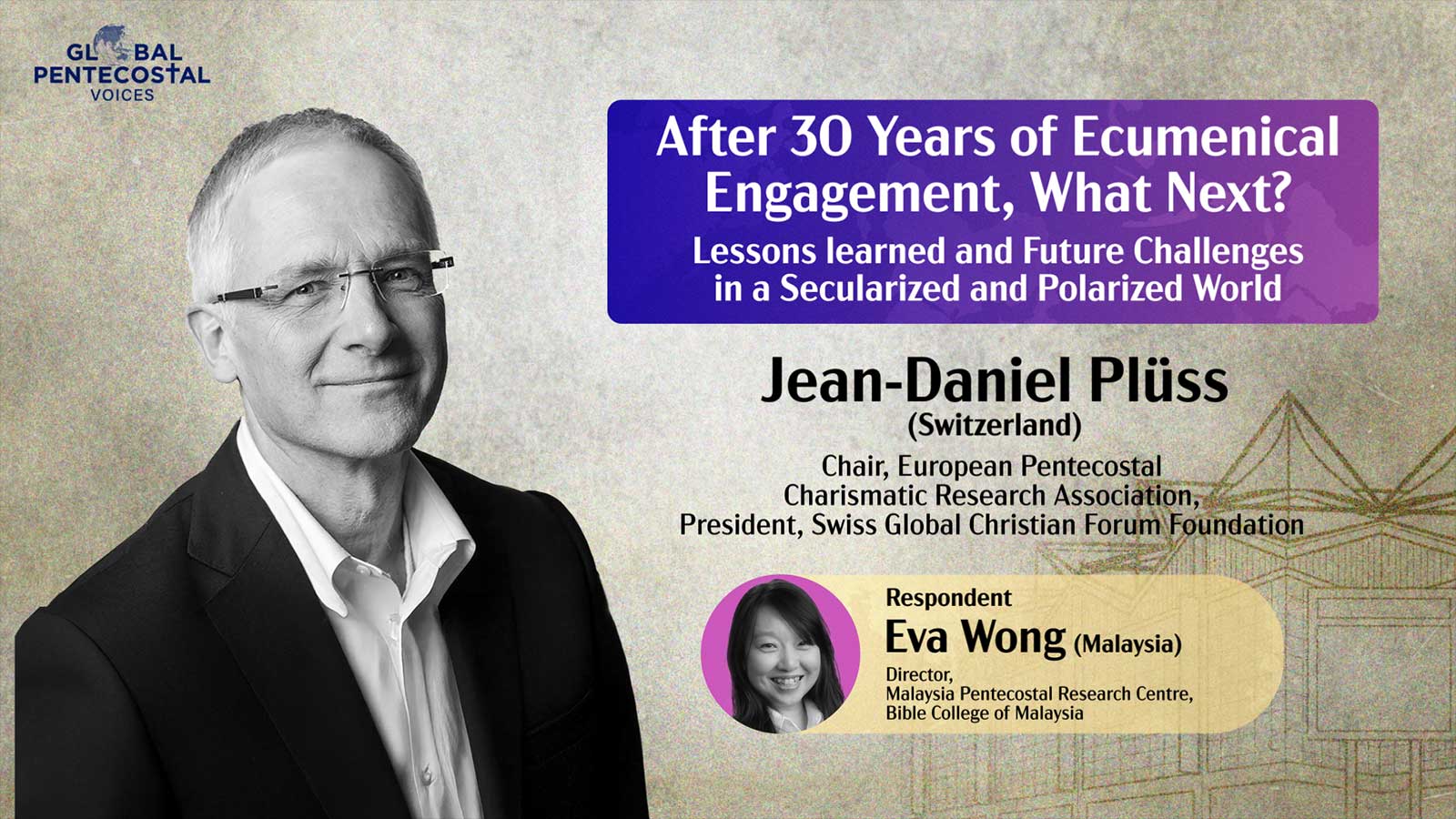
Lessons Learned During 30 Years of Ecumenical Dialogue.
What Future Challenges Can Be Expected? (EAPS 2025)
Having been involved in various ecumenical dialogues over the past three decades, I have gained some important insights. Much progress has been made, yet the question remains: How can we, despite our diverse histories and identities, live and function as the Church together? Secularising tendencies in our societies that bring about new challenges, especially in the large urban centres. For the sake of a credible Christian witness, we need to be able to address common concerns together. There are fundamental spiritual desires that are not met in a secular context. The Christian churches have the opportunity to respond to these human yearnings, to a void that is felt, and present the Good News of Jesus Christ in relevant ways. Furthermore, as we live in increasingly pluralistic societies, we witness a growing polarisation of attitudes. This is evident in one-sided nationalist agendas and a discourse rooted in fear. The ecumenical work done so far can serve as a bridge for a common Christian witness “so that the world may believe.”