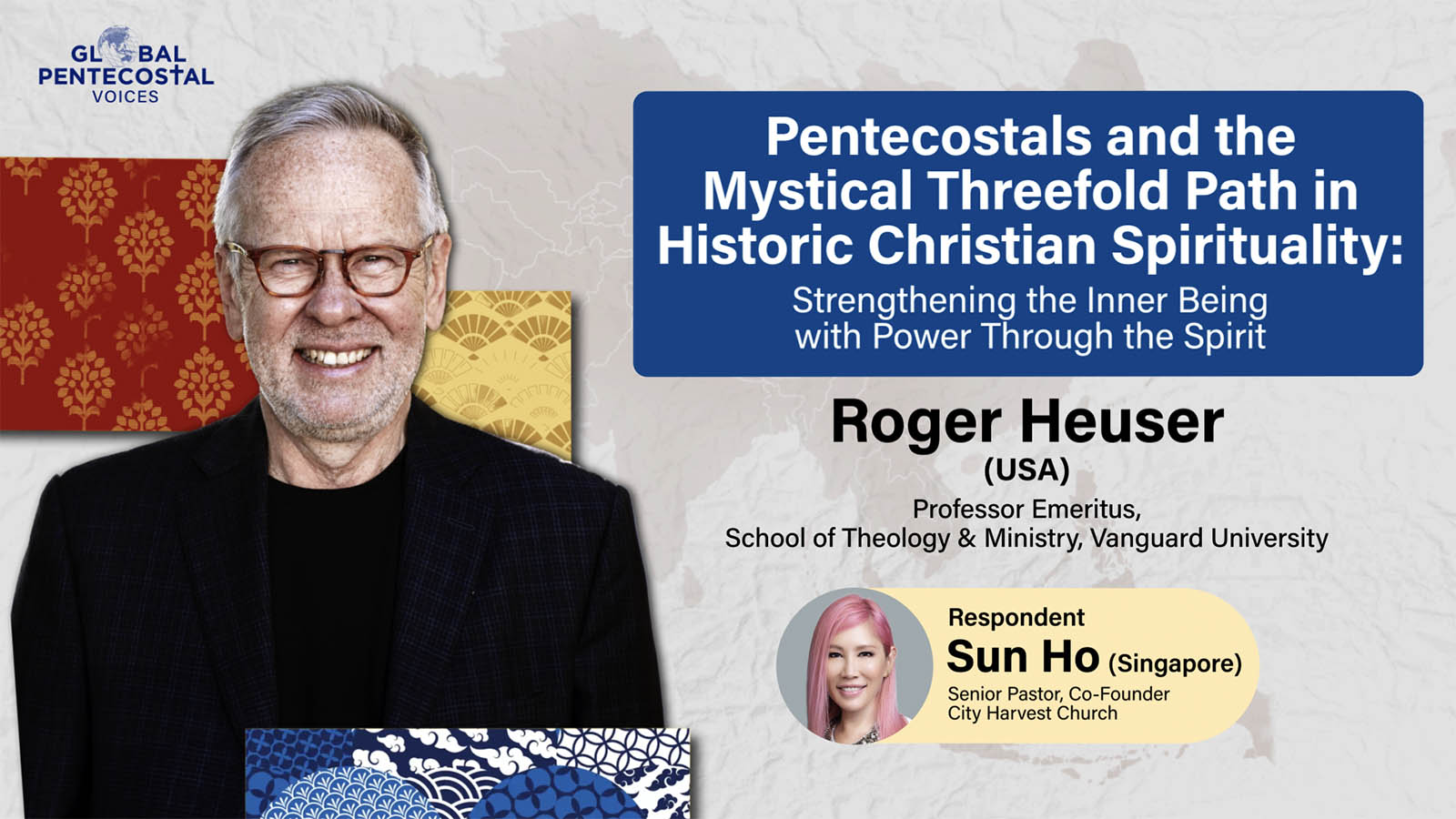
Roger Heuser holds a PhD in Religious Studies from New York University and is professor emeritus in the School of Theology and Ministry at Vanguard University, where he has served since 1983. Over the course of his academic career, he has held key leadership roles including dean of the graduate school, director of the graduate programme in religion, chair of the division of religion, and co-director of the Judkins Institute for Leadership Studies.
With extensive experience in academic administration and teaching at both graduate and undergraduate levels, Prof Roger has helped shape the study and practice of Christian leadership across a range of educational and ministry contexts. His work brings together theology, spirituality, and the social sciences, reflecting a deeply interdisciplinary approach to leadership formation.
Before his long-standing academic career, Prof Roger served 12 years in pastoral ministry, giving him a strong practical foundation that continues to inform his teaching and leadership development work. His approach focuses especially on Christian spirituality and its application within churches, nonprofits, and organisational contexts.
Prof Roger was also instrumental in launching Vanguard University’s MA in leadership studies programme, which continues to emphasise spiritually grounded leadership development.
Pentecostals and the Mystical Threefold Path in Historic Christian Spirituality: Strengthening the Inner Being with Power Through the Spirit (APS 2025)
Increasingly, scholars have framed Pentecostals’ theological identity and spirituality flowing in multiple streams of Christianity, including the historic, mystical stream. What can we learn from the mystical forbearers of Christian faith? What does mystical theology have to offer a Spirit-Empowered Global Christianity? Could the mystics’ theological understanding of the soul’s journey toward intimate union with God inform Pentecostal understandings of sanctification and spiritual formation? My aim in this paper is to explore the theological/metaphorical frameworks used by Teresa of Avila and John of the Cross who, among others in mystical theology, described the soul’s journey in what has come to be known as the Threefold Path – the Way of Purgation (Purification), the Way of Illumination, and the Way of Union. I will also propose potential arguments for Pentecostals to consider in accentuating the Spirit-abiding presence of the soul’s journey toward Christlikeness.