Frank Macchia is the associate director of the Centre for Pentecostal and Charismatic Studies at Bangor University in Wales, and he is also a professor of Christian Theology at Vanguard University in California. He holds an MDiv from Union Theological Seminary at Columbia University in New York and DTh from the University of Basel in Switzerland. He received his doctorate with distinction and won the Jacob Burckhardt Prize for his dissertation on the message of the Blumhardts.
Prof Frank was formerly the president of the Society for Pentecostal Studies (SPS) and the editor of its Pneuma journal. He received the Lifetime Achievement Award by the SPS in 2015. He was also awarded an honorary DDiv from the Pentecostal Theological Seminary in Tennessee, which is the leading seminary for the Church of God.
As an ecumenical theologian, Prof Frank engages in broad conversations, serving six years on the Faith and Order Commission of the National Council of Churches in America, as well as in other conversations, such as the Reformed and Pentecostal Dialogue. He has participated in numerous ecumenical consultations, including the World Council of Churches/Evangelical Dialogue, and the Consultation on Christian Unity held at Princeton Theological Seminary.
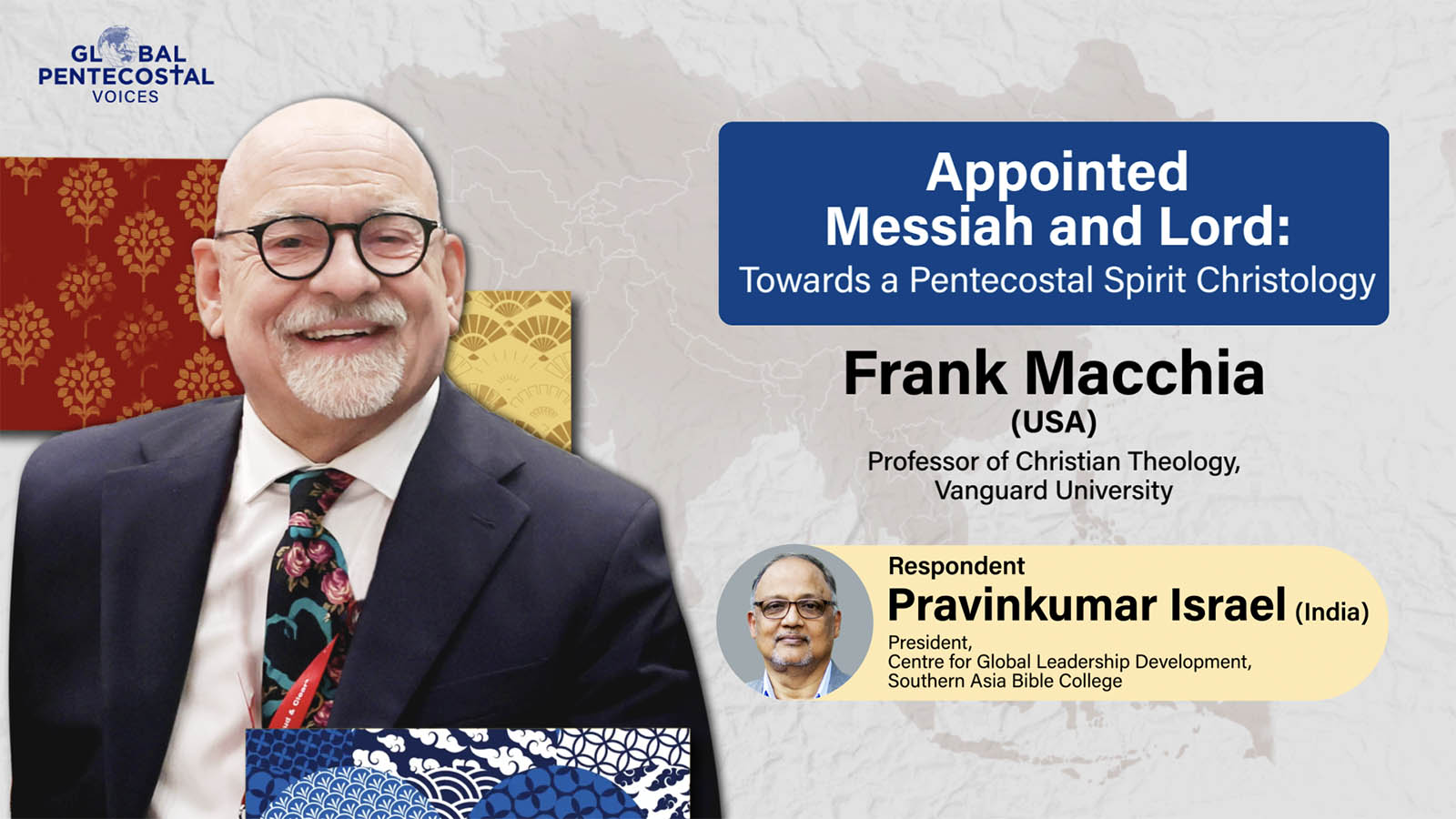
Appointed Messiah and Lord: Towards a Pentecostal Spirit Christology (APS 2025)
Pentecost is not merely a moment. It is the culmination of Christ’s messianic mission. This presentation traces the narrative arc from incarnation to exaltation, showing how Jesus is appointed Messiah and Lord through resurrection and the outpouring of the Spirit. Drawing from Luke–Acts, Macchia presents a Spirit Christology that centers on Jesus as the Spirit-Baptizer, whose reign is marked by empowerment, inclusion, and mission. From the Spirit-conceived Son in Mary’s womb to the Spirit-anointed Messiah at the Jordan, and finally to the exalted Lord who pours out the Spirit at Pentecost, Christ’s journey is one of faithful obedience and transformative power. His victory over sin and death is not only personal—it is shared, extended to all flesh through the Spirit. This is a Christology of divine communion, where the Spirit unites us to Christ and to one another in mission and holiness.
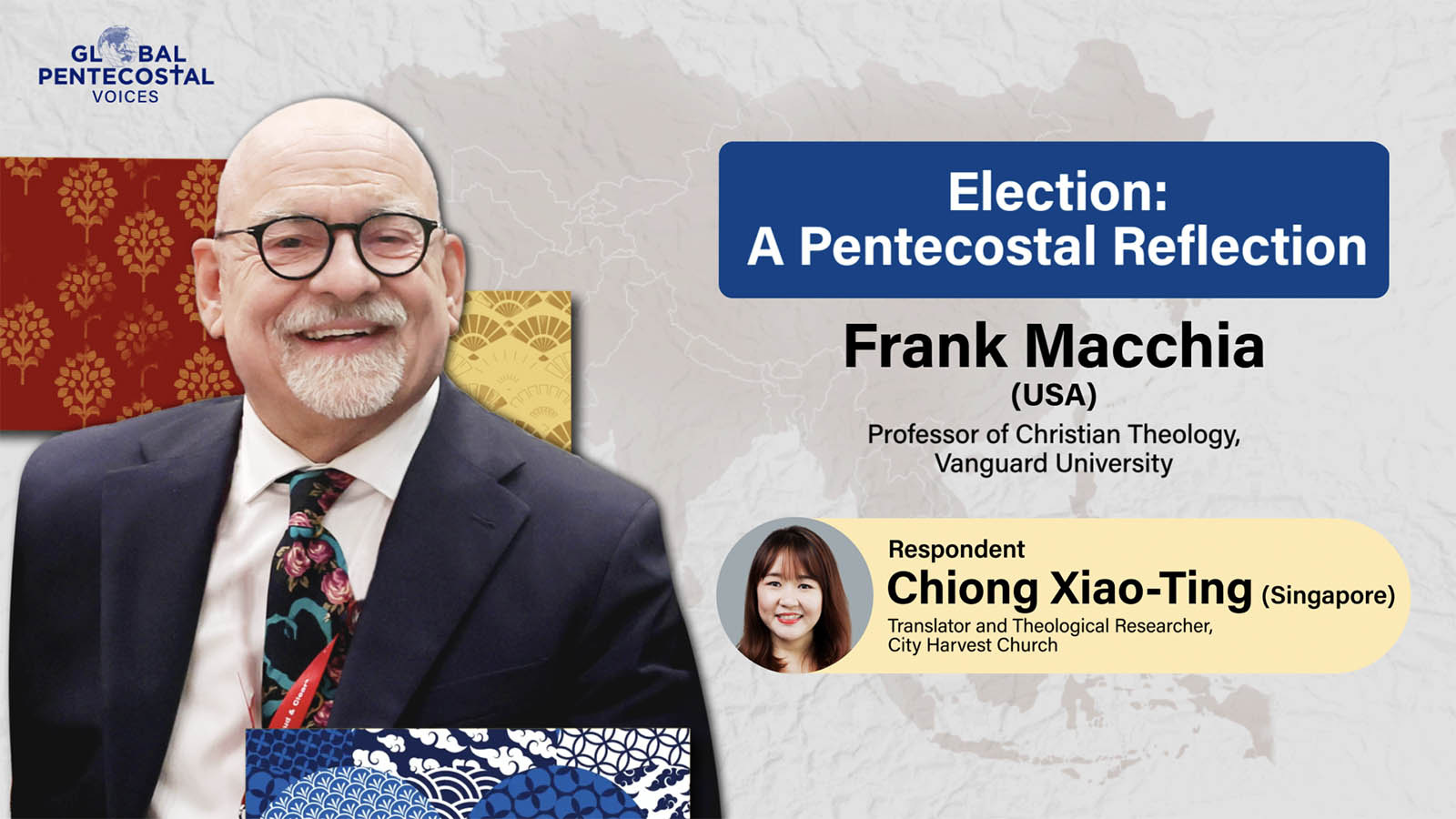
What does it mean to be chosen by God? In this presentation, I reclaim the doctrine of election through a Pentecostal lens; Christ-centered, Spirit-empowered, and missionally expansive. Rejecting deterministic views that divide humanity into the eternally saved and damned, I draw from Karl Barth to affirm that election is not a hidden decree but a revealed promise in Jesus Christ, the elect Son for all. Election is God’s eternal decision to be God with and for us. It is fulfilled in Christ’s incarnation, death, and resurrection, and extended to all through the Spirit. Israel and the Church are the environments of this promise, called to bear witness to the world. Yet election is not automatic—it must be received by grace through faith. The Spirit, as the Spirit of adoption, draws us into this covenantal life, empowering the Church to proclaim the Gospel of divine favor to all nations. I aim to show that election is not about exclusion but about the overflowing generosity of God’s love. It is a call to communion, mission, and hope; rooted in Christ, carried by the Spirit, and destined for the renewal of all creation.
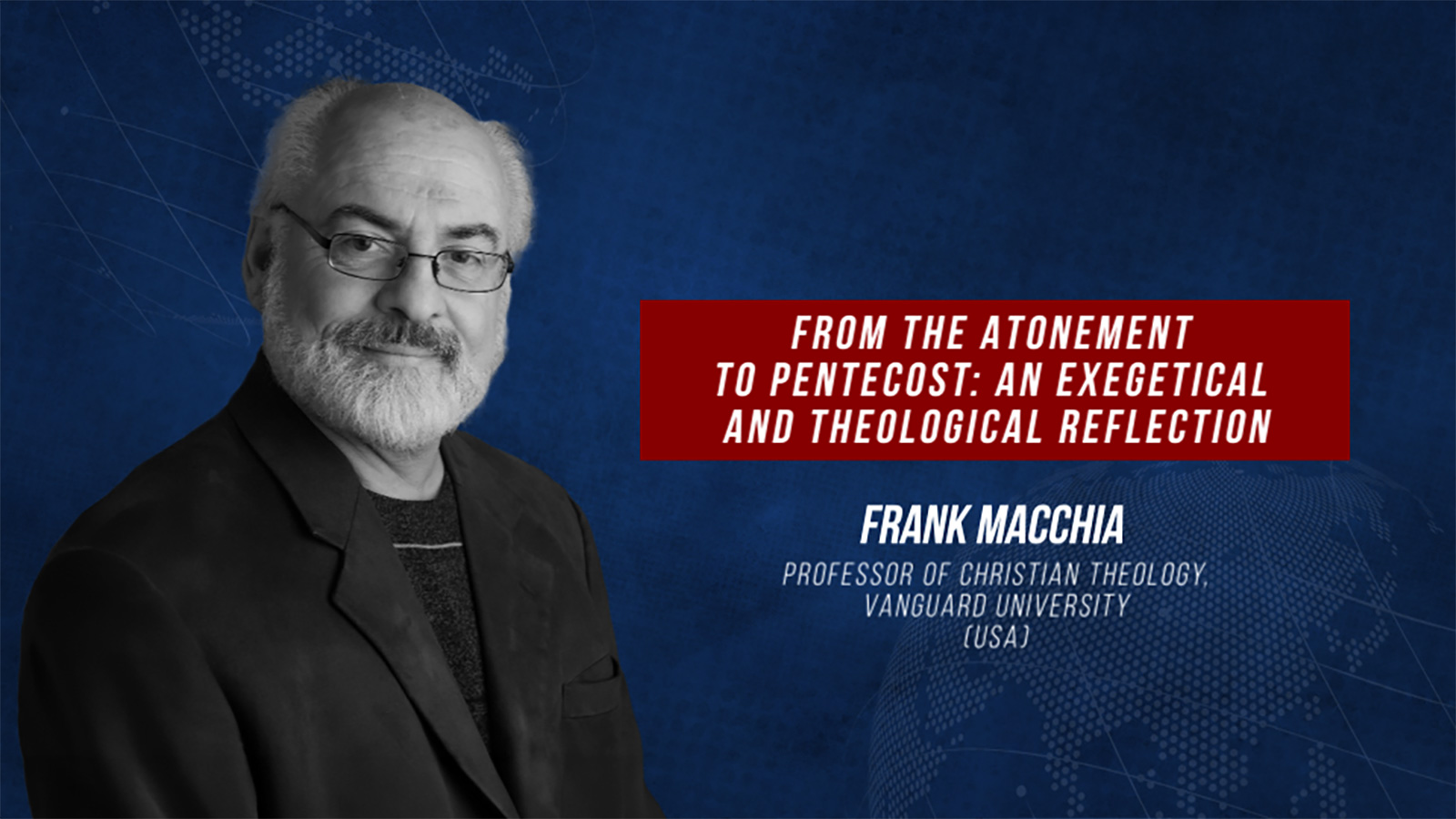
From the Atonement to Pentecost: An Exegetical and Theological Reflection (GPS 2023)
Many separate the atonement from Pentecost to the degree that the link between them is lost. I wish to explore that link. The link is based on the insight that the cross of Christ is not limited to Israel. Rather, Christ seeks at the cross to open his life to all peoples, redeeming persons “from every tribe, and language, and people, and nation” (Rev. 5:9) and breaking down the wall of hostility between them (Eph. 2:14-16). The Spirit is poured out on all peoples at Pentecost in loyalty to the cross and for the sake of the crucified and risen Christ.