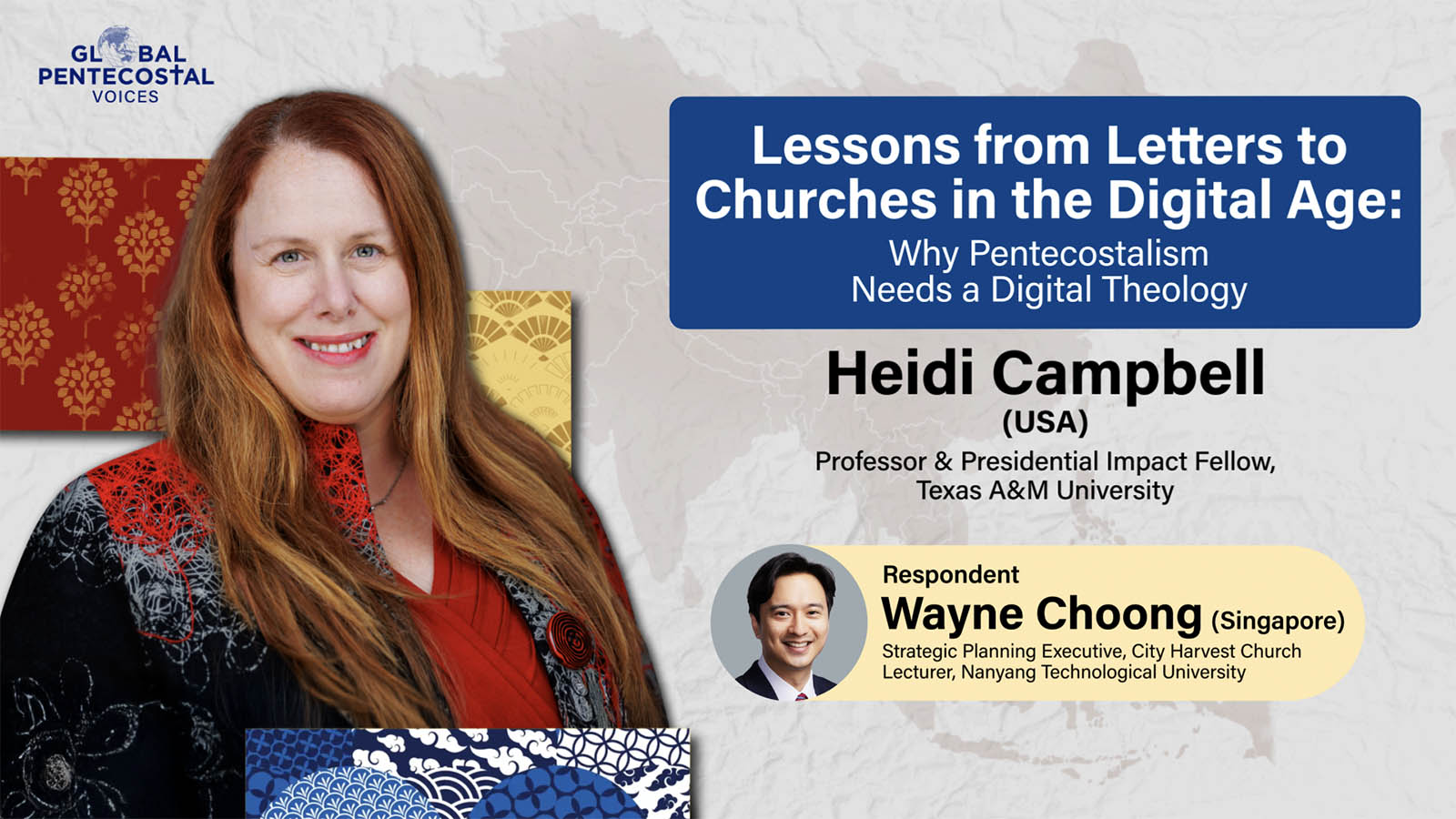
Heidi A. Campbell is professor of communication and Presidential Impact Fellow at Texas A&M University, where she is also an affiliate faculty member in religious studies. She holds a PhD from the University of Edinburgh and is a pioneering scholar in digital religion studies.
Dr Heidi directs the Network for New Media, Religion and Digital Culture Studies and her research focuses on the social shaping of technologies and how religious groups negotiate the use of new technologies. She co-edits both the Routledge Religion and Digital Culture book series and the Journal of Religion, Media & Digital Culture. Her research explores how Jewish, Muslim, and Christian communities engage with new media. She has published 11 books and over 100 academic articles, including When Religion Meets New Media (2010), Digital Religion (2013, 2nd ed. 2021) as well as Digital Creatives and Rethinking Religious Authority (2021).
A widely recognised expert, she has advised international research projects and served as president of the International Society for Media, Religion & Culture (2021–2023). Her work has been featured in The Guardian, Wall Street Journal, and BBC World Service.
Lessons from Letters to Churches in the Digital Age: Why Pentecostalism Needs a Digital Theology (APS 2025)
In a world increasingly shaped by screens, algorithms, and artificial intelligence, this paper calls on Pentecostal churches to develop not just digital strategies—but a Spirit-led digital theology. Drawing from my work in digital religion and theology, I want to challenge leaders to reflect deeply on how technology reshapes worship, community, and spiritual authority. Through a creative reimagining of Revelation’s letters to the churches, the presentation introduces three symbolic congregations; Luddite-ocia, Technopolis, and Middle-Tech, each representing different postures toward digital engagement. It is vital that churches to move beyond fear or uncritical embrace, and instead cultivate discernment, humility, and theological reflection in their use of digital tools. Pentecostalism, with its emphasis on Spirit-empowerment, testimony, and prophetic witness, has much to offer the digital age. But to lead faithfully, it must listen to the Spirit’s voice amid the noise of media culture. Digital theology is not optional, it is essential for churches seeking to be light in both sacred and virtual spaces.