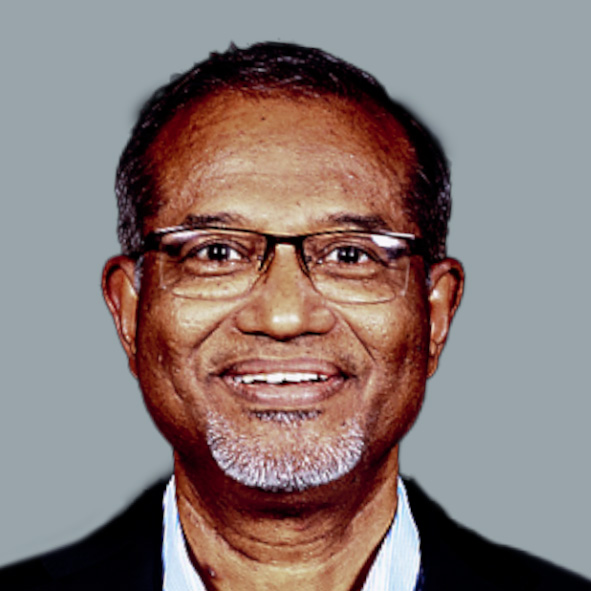
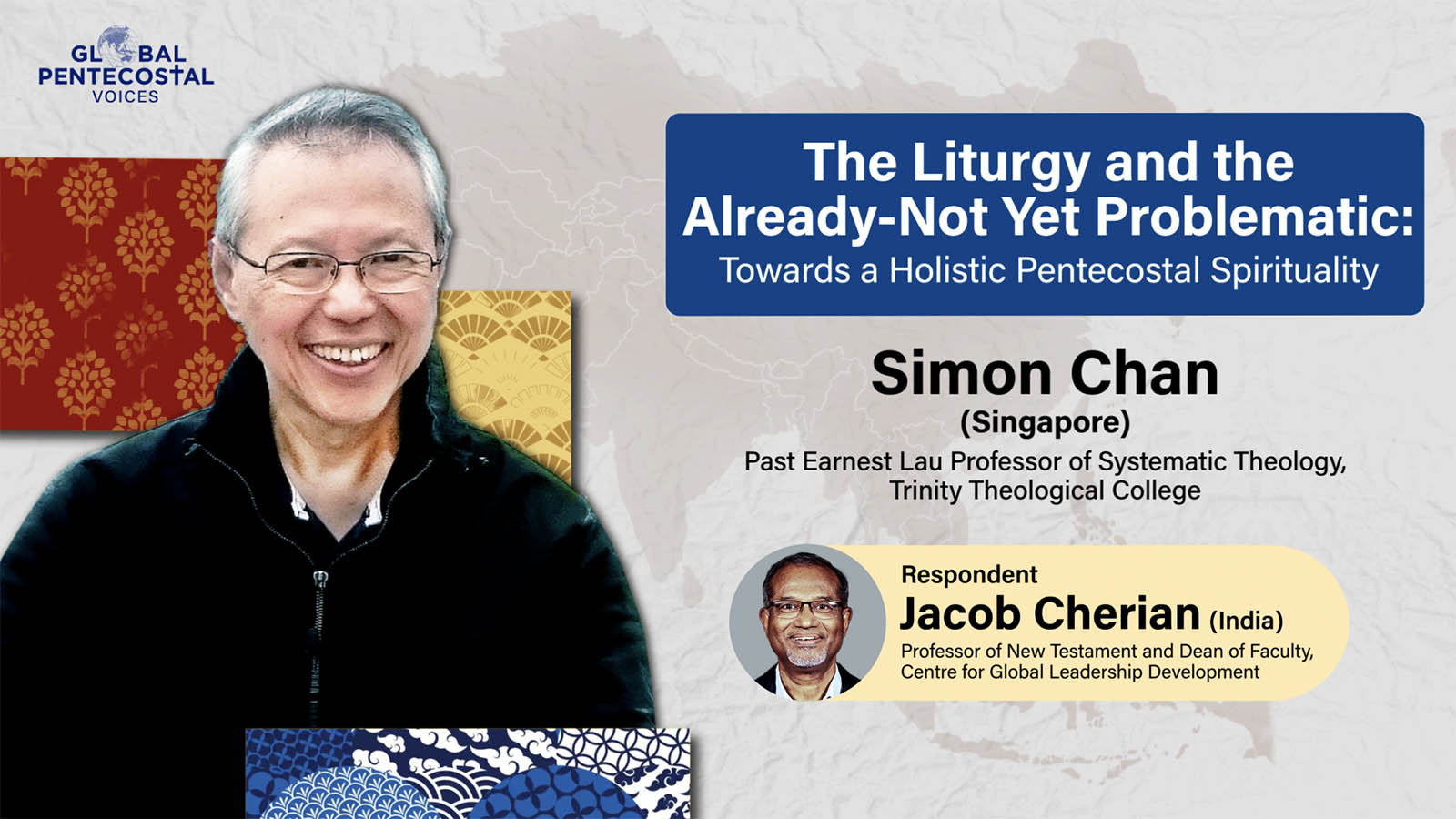
Professor of New Testament and Dean of Faculty,
Centre for Global Leadership Development
Jacob Cherian is professor of New Testament and dean of faculty at the Centre for Global Leadership Development (formerly Southern Asia Bible College), where he has served since 1987. He holds a PhD from Princeton Theological Seminary, a ThM from Regent College, a BD from Southern Asia Bible College, and a BSc from Jabalpur University.
Dr Jacob’s academic expertise is in New Testament studies, with a particular focus on Pauline theology. His research and teaching emphasise the holistic application of biblical faith, equipping churches for spiritual maturity and integral mission.
He is a member of the Theology Working Group for the Lausanne Movement, where he has made significant contributions, including to the Seoul Statement entitled The Church: The People We Love and Build Up—the official affirmation of the Seoul 2024 global gathering. He is also the author of the Lausanne Movement’s Occasional Paper titled Do You Understand What You Are Reading? Toward a Faithful Hermeneutic of Scripture.
A respected scholar and leader, Dr Jacob has mentored generations of students in biblical studies and leadership formation. He remains actively engaged in theological education and mission initiatives, shaping Christian leaders across South Asia and beyond.
Leadership is a complex phenomenon that cannot be easily defined as a single concept. Still, it is often understood as a set of social processes that influence people towards common goals—an approach that I will follow in this study. Drawing from general leadership theory and research on Pentecostal leadership, I will emphasise the interaction between leaders, followers, and the spiritual dimension, leading to a constructivist perspective on leader-follower relationships. The article will first address leadership in various settings, emphasising the need to contextualise leadership in different cultures, but also keeping an analytical distance to avoid dominating discourses that break with Christian perspectives. Second, I will discuss the complexity in Pentecostal leadership, especially the collaboration between divine and human interventions, the dialectic connection between agency and structure, and the ambivalence and tension between leaders and followers in ecclesial settings. Finally, I will highlight the constructive relations between leaders and followers. While leaders hold a formal position, leadership is also a social phenomenon effective only if it makes sense to church members, implying that the leader’s task is not to create everything from scratch but to build relationships and draw from the resources and spirituality present within the congregation.
© 2025 City Harvest Church. All Rights Reserved.